

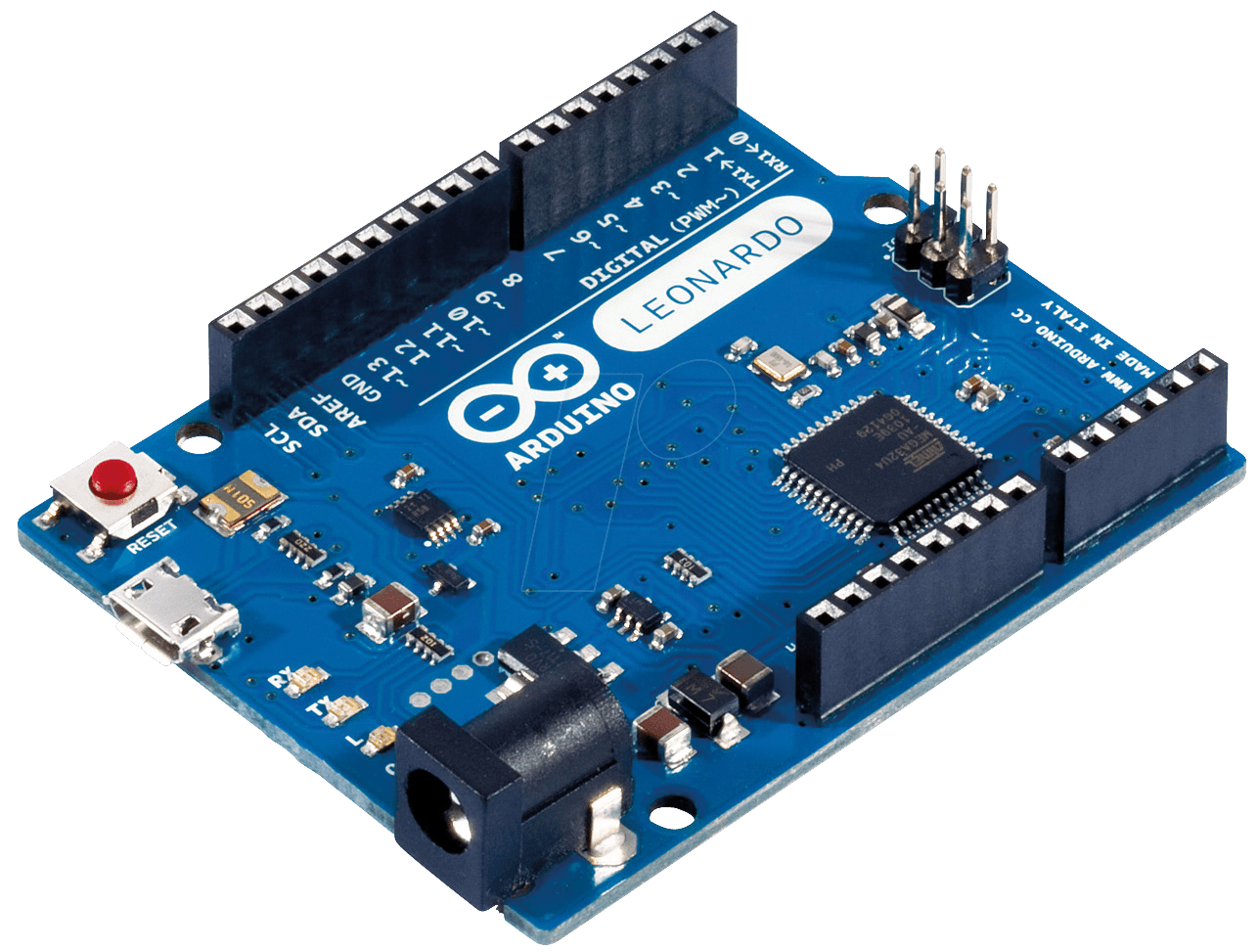
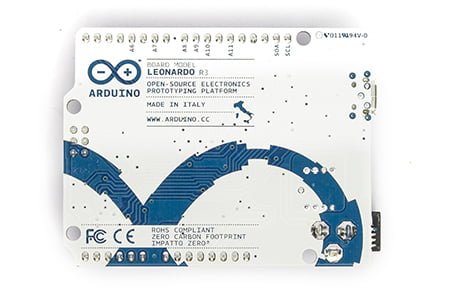
Arduino Leonardo R3
Arduino Leonardo R3 development board with an ATmega32U4 microcontroller, native USB communication, 20 digital I/O pins, seven PWM outputs, 12 analog input channels and a 16MHz clock. Suitable for USB keyboard or mouse interfaces, robotics, automation and embedded-learning projects.
₨ 1,599 ₨ 1,820
Arduino Leonardo R3 Price in Pakistan
The Arduino Leonardo R3 is based on the ATmega32U4 microcontroller. Unlike boards that use a separate USB-to-serial controller, the ATmega32U4 provides native USB communication. This allows compatible sketches to present the board to a computer as a keyboard, mouse or serial device.
Key specifications
- Microcontroller: ATmega32U4
- Operating voltage: 5V
- Recommended input voltage: 7V to 12V
- 20 digital input/output pins
- Seven PWM-capable outputs
- 12 analog input channels
- 32KB flash memory, 2.5KB SRAM and 1KB EEPROM
- 16MHz clock
- Native USB communication through the micro USB connection
Suitable applications
- USB keyboard and mouse controller projects
- Custom USB interfaces
- Robotics, automation and sensor systems
- Educational programming and embedded prototypes
Compatibility guidance
The Leonardo differs from the UNO in its USB implementation and some pin assignments. Confirm shield pin use and library compatibility before assembly. Use a compatible micro USB data cable; a power-only cable cannot upload sketches.
For breadboard connections, pair the board with male-to-male jumper wires and a GL-12 solderless breadboard.
Explore more Arduino development boards from Robonation Pakistan. For authoritative specifications and setup guidance, review the official Arduino Leonardo documentation.
Based on 0 reviews
Be the first to review “Arduino Leonardo R3”
Related products
-
Arduino & IOT Boards, Boards, Sensors, WIFI Modules
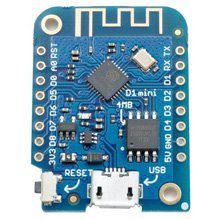
D1 Mini V3 Nodemcu Wifi Esp8266ex Usb Ch340c.
D1 mini is a breadboard which is compatible with WiFi development board on the ESP8266. It is a mini Arduino with WiFi module and has one analog port and 11 digital ports. t runs from 5V or 3.3V. Logic levels are 3.3V for all ports.
SKU: n/a -
Arduino & IOT Boards, Kits
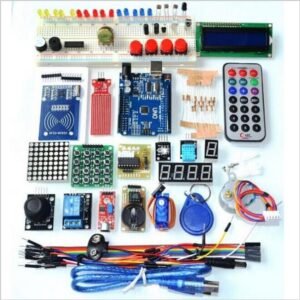
Arduino Starter Kit RFID Based
This Arduino-compatible RFID starter kit combines a clone development board, RFID reader and tags with breadboard parts, sensors, motors, display modules and project components. It is suitable for learning identification, access-control prototypes and general electronics. Confirm the current kit contents before ordering.
SKU: 167 -
Arduino & IOT Boards, Keypads
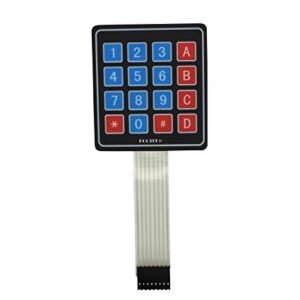
4×4 Flat Matrix Keypad
- Keypad Layout: 4×4 matrix layout, consisting of 16 keys arranged in four rows and four columns.
- Size: Typically measures 76mm x 69mm (Length x Width).
- Number of Keys: 16 programmable keys, each with a unique position in the matrix.
- Input Method: When a key is pressed, it generates a unique combination of row and column signals, which can be decoded to identify the pressed key.
- Interface: Typically interfaces with microcontrollers or embedded systems using digital I/O pins.
- Material: Made of durable and lightweight materials suitable for various environments.
- Compatibility: Compatible with a wide range of microcontrollers and development boards.
- Application: Commonly used in projects requiring user input, password entry, or menu navigation.
SKU: n/a -
Arduino & IOT Boards, Boards
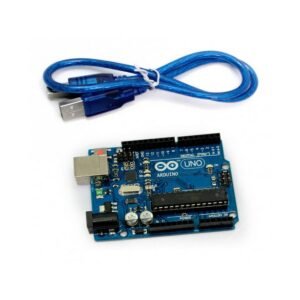
Arduino UNO R3 Dip WITH CABLE
Arduino UNO R3 DIP development board with ATmega328P controller and USB programming cable. It provides 14 digital I/O pins, six analog inputs, 5V operation and a familiar UNO layout for electronics learning, robotics, automation and sensor prototypes. This listing is for the board and cable only.
SKU: ARD-002
There are no reviews yet.