

-
×
 Multiturn Variable Potentiometer 1K
1 × ₨ 550
Multiturn Variable Potentiometer 1K
1 × ₨ 550
Subtotal: ₨ 550
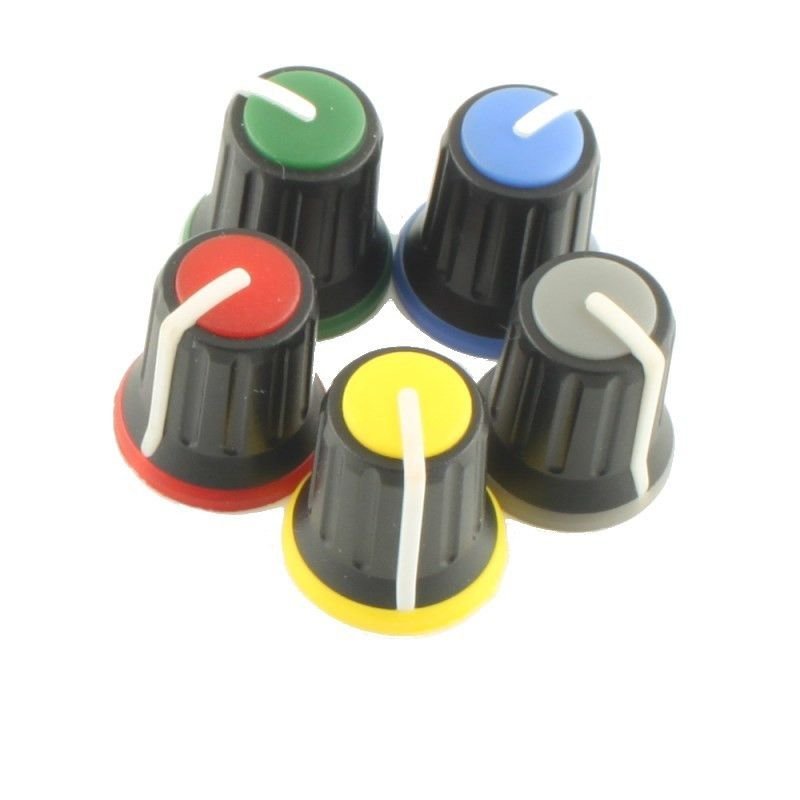
A potentiometer knob is an accessory that is used as a control knob for a potentiometer.
₨ 21
A potentiometer is a manually adjustable variable resistor with 3 terminals. Two terminals are connected to both ends of a resistive element, and the third terminal connects to a sliding contact, called a wiper, moving over the resistive element. The position of the wiper determines the output voltage of the potentiometer. The potentiometer essentially functions as a variable voltage divider. The resistive element can be seen as two resistors in series(potentiometer resistance), where the wiper position determines the resistance ratio of the first resistor to the second resistor. A potentiometer is also commonly known as a potentiometer or pot. The most common form of potmeter is the single turn rotary potmeter. This type of pot is often used in audio volume control (logarithmic taper) as well as many other applications. Different materials are used to construct potentiometers, including carbon composition, cermet, wirewound, conductive plastic or metal film.
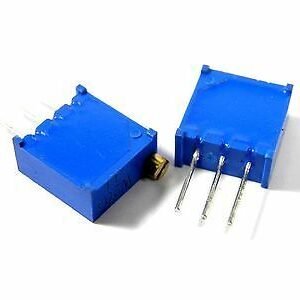
10K ohm Trimmer Trim Pot Variable Resistor 3296W 3296 Variable Resistor is a manually adjustable variable resistor with 3 terminals. Two terminals are connected to both ends of a resistive element, and the third terminal connects to a sliding contact, called a wiper, moving over the resistive element. The position of the wiper determines the output voltage of the potentiometer. The potentiometer essentially functions as a variable voltage divider. The resistive element can be seen as two resistors in series(potentiometer resistance), where the wiper position determines the resistance ratio of the first resistor to the second resistor. A potentiometer is also commonly known as a potentiometer or pot. The most common form of potmeter is the single turn rotary potmeter. This type of pot is often used in audio volume control (logarithmic taper) as well as many other applications. Different materials are used to construct potentiometers, including carbon composition, cermet, wirewound, conductive plastic or metal film.


There are no reviews yet.