



Force Sensitive Resistor 0.5 INCH FSR
Thin 0.5-inch force-sensitive resistor for detecting relative touch and pressure in Arduino-compatible controls, robotics and interface prototypes. Resistance decreases as force is applied to the active circular area. Use a voltage-divider circuit and application-specific calibration; this sensor is not a precision weighing load cell.
₨ 1,150 ₨ 1,404
0.5-Inch Force Sensitive Resistor Price in Pakistan
This thin force-sensitive resistor (FSR) changes resistance when pressure is applied to its circular active area. It is useful for touch controls, grip detection, robotics interfaces, pressure mapping experiments and other projects that need relative force sensing rather than laboratory-grade weight measurement.
Listed dimensions and characteristics
- Active detection area: approximately 14.5mm diameter
- Overall width: approximately 18.3mm
- Total length: approximately 56mm
- Thickness: approximately 0.4mm
- Passive variable-resistance output
Using an FSR with a microcontroller
Connect the sensor as part of a voltage divider and read the divided voltage with a compatible analog input. The response is nonlinear and varies with the contact surface, mounting pressure and unit-to-unit tolerance, so calibrate it inside the finished assembly rather than treating it as a precision scale.
Apply force to the active circle, support the sensor on a smooth surface and avoid sharp folds, creases or pulling on the tail. Do not solder for prolonged periods close to the sensing area.
For voltage-divider testing, connect the FSR to a suitable analog input on an Arduino UNO R3 and calibrate the completed mechanical assembly.
Explore more force and pressure sensors from Robonation Pakistan. For general FSR integration principles, review the Interlink FSR integration guidance.
Based on 0 reviews
Be the first to review “Force Sensitive Resistor 0.5 INCH FSR”
Related products
-
Accelero, Gyro. IMU, Magneto, Sensors
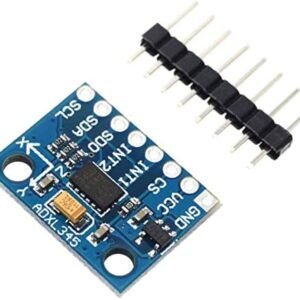
GY-291 ADXL345 3-Axis Accelerometer Module
- Main Chip: ADXL345
- Model: GY-291
- Power Supply: 3-5V
- Means of Communication: IIC / SPI Communication Protocol
- Measuring Range: ±2g /±16g
- Digital-Output Triple-Axis Accelerometer with a Programmable Full-Scale Range of ±2g, ±4g, ±8g and ±16g and Integrated 16-bit ADCs
- Accelerometer Normal Operating Current: 450µA
- Ultralow Power: as low as 23 μA in Measurement Mode and 0.1 μA in Standby Mode at VS = 2.5 V (typical)
- Sleep Mode Current: 8µA
- Communication: SPI (3- and 4-wire) and I2C Digital Interfaces
- User-Programmable Interrupts
- Wake-On-Motion Interrupt for Low Power Operation of Applications Processor
SKU: n/a -
Distance & Proximity, Sensors
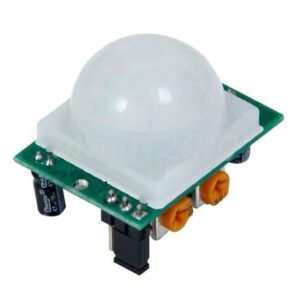
HCSR501 HC-SR501 PIR Sensor
HC-SR501 passive infrared motion sensor for Arduino-compatible alarms, automatic lighting and occupancy prototypes. It provides adjustable sensitivity and output delay, plus repeatable or non-repeatable trigger modes. Allow a warm-up period and test the installed detection area before relying on the output.
SKU: n/a -
Current & Voltage, Sensors
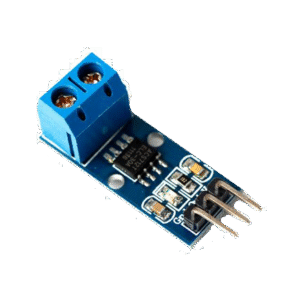
ACS712 Current Sensor 30A
ACS712 Current Sensor 30A current sensor board is based on the Allegro ACS712ELCTR-30A bi-directional hall-effect current sensor chip that detects positive and negative flowing currents in the range of minus 30 Amps to positive 30 Amps. The board operates at 5V DC and the current flow through the sensor is converted to an output voltage starting at 1/2Vcc (or 2.5V) for no current flow and moves up 66mV per amp for positive current or down -66mV per amp for negative current.
SKU: n/a -
Flex & Force, Sensors
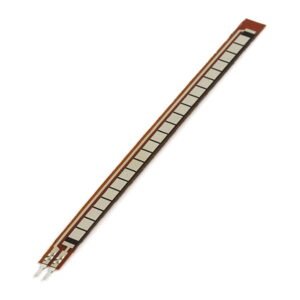
Flex Sensor 4.5″
4.5-inch resistive flex sensor for Arduino-compatible bend, posture, wearable-control and robotics experiments. Resistance increases as the active strip bends. Read it through a voltage-divider circuit, calibrate it in the finished assembly and protect the base and connector from sharp bends or repeated strain.
SKU: n/a
There are no reviews yet.