

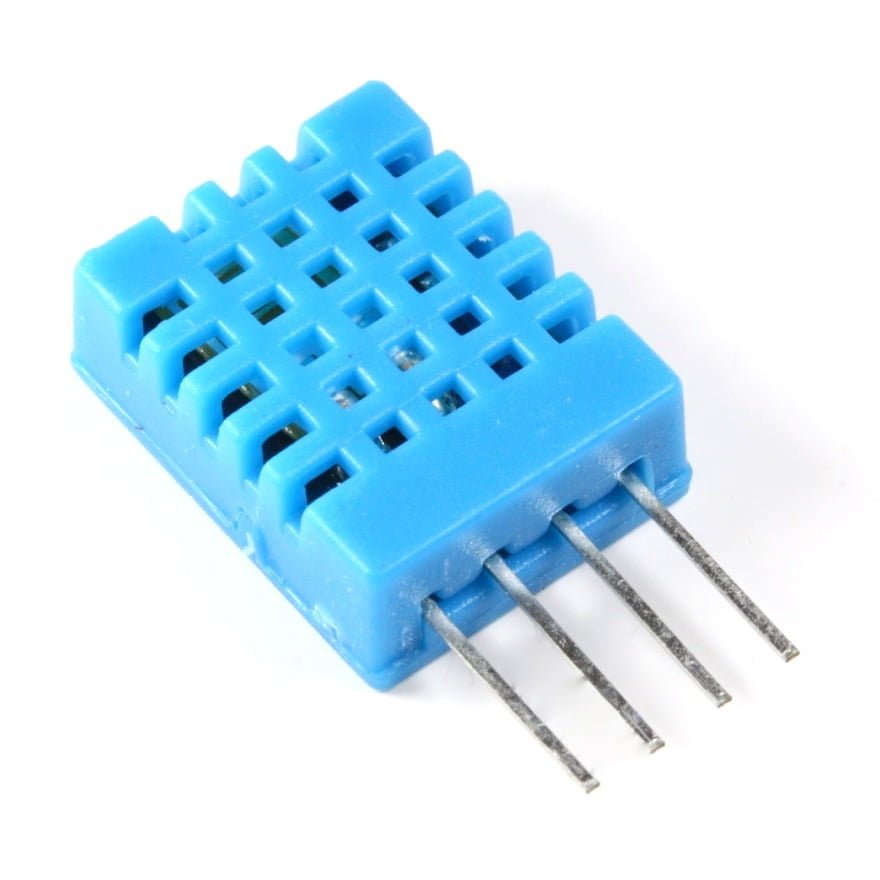
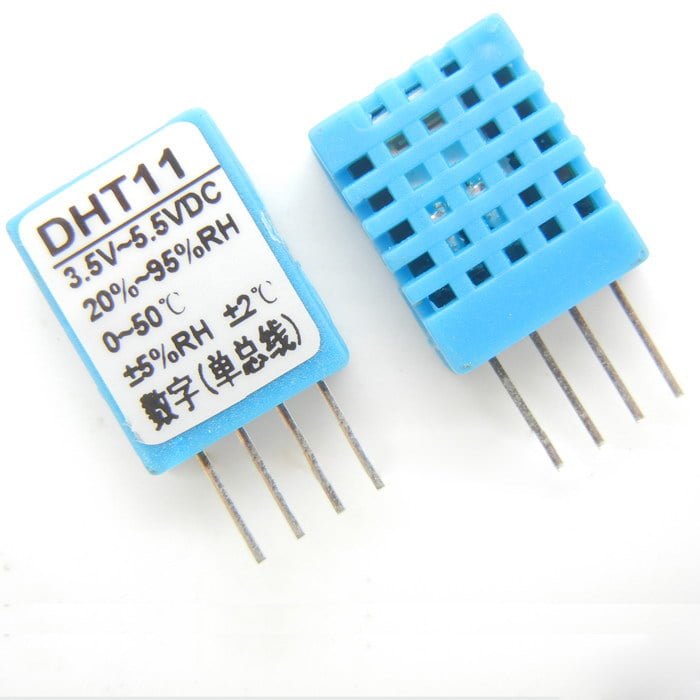
DHT11 Humidity & Temperature Sensor
DHT11 digital temperature and humidity sensor for Arduino-compatible room monitors, incubator prototypes, greenhouses and learning projects. Typical measurement ranges are 0°C to 50°C and 20% to 90% RH, with modest accuracy and a relatively slow sampling rate. It is not intended for precision laboratory measurement.
₨ 280 ₨ 364
DHT11 Temperature and Humidity Sensor
The DHT11 is a low-cost digital sensor for measuring ambient temperature and relative humidity. It provides a calibrated digital signal and is commonly used with Arduino and other microcontrollers in basic environmental monitoring projects.
Key Specifications
- Supply voltage: 3V to 5.5V DC
- Digital signal output
- Typical humidity range: 20% to 90% RH
- Typical temperature range: 0°C to 50°C
- Humidity accuracy: Approximately ±5% RH
- Temperature accuracy: Approximately ±2°C
Common Applications
- Weather stations and room monitors
- Incubator and greenhouse prototypes
- Home automation and ventilation projects
- Arduino learning and sensor experiments
For stable readings, follow the recommended sampling interval and wiring requirements for the DHT11.
For a basic room-monitoring project, connect the DHT11 to an Arduino UNO R3 and follow the sensor library wiring and sampling guidance.
Explore more temperature and humidity sensors available from Robonation Pakistan.
For buyers looking for DHT11 sensor price in Pakistan, this module is a practical choice for learning and basic room monitoring where modest accuracy and a slow sampling rate are acceptable. It is not intended for precision laboratory measurement. For code setup and supported examples, consult the Arduino DHT sensor library reference.
Based on 0 reviews
Be the first to review “DHT11 Humidity & Temperature Sensor”
Related products
-
Sensors, Weight
Load Sensor – 50kg
50kg-class load sensor for weighing and force-measurement prototypes. Its low-level bridge signal normally requires a compatible load-cell amplifier or ADC such as an HX711, careful mechanical mounting and calibration with known weights. Confirm whether the planned scale needs multiple half-bridge sensors before ordering.
SKU: n/a -
-
Current & Voltage, Sensors
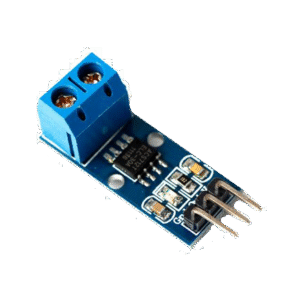
ACS712 Current Sensor 30A
ACS712 Current Sensor 30A current sensor board is based on the Allegro ACS712ELCTR-30A bi-directional hall-effect current sensor chip that detects positive and negative flowing currents in the range of minus 30 Amps to positive 30 Amps. The board operates at 5V DC and the current flow through the sensor is converted to an output voltage starting at 1/2Vcc (or 2.5V) for no current flow and moves up 66mV per amp for positive current or down -66mV per amp for negative current.
SKU: n/a -
Distance & Proximity, Sensors
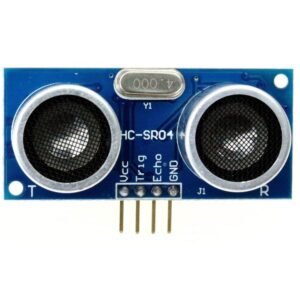
Ultrasonic Sensor HC-SR04
- Power Supply : 5V DC
- Quiescent Current : <2mA
- Working Currnt: 15mA
- Effectual Angle: <15
- Ranging Distance : 2cm 400 cm/1x13ft
- Resolution : 0.3 cm
- Measuring Angle: 30 degree
- Trigger Input Pulse width: 10uS minimum
- Dimension: 45mm x 20mm x 15mm
SKU: n/a
There are no reviews yet.