

Single Lead Heart Rate Monitor ECG – AD8232
Out of stock
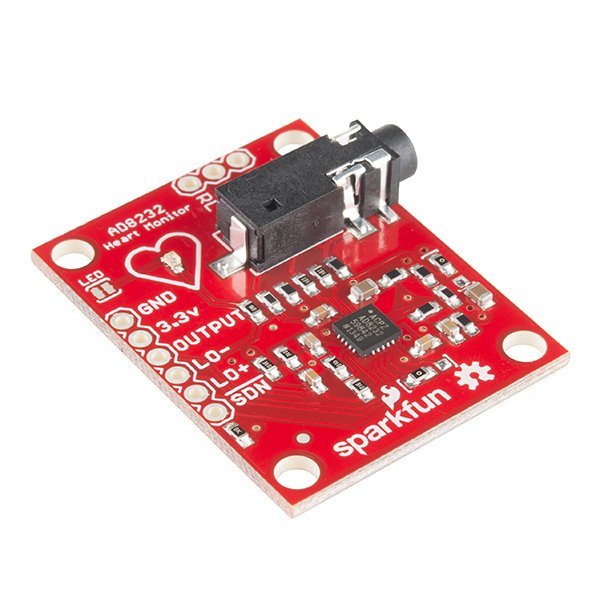
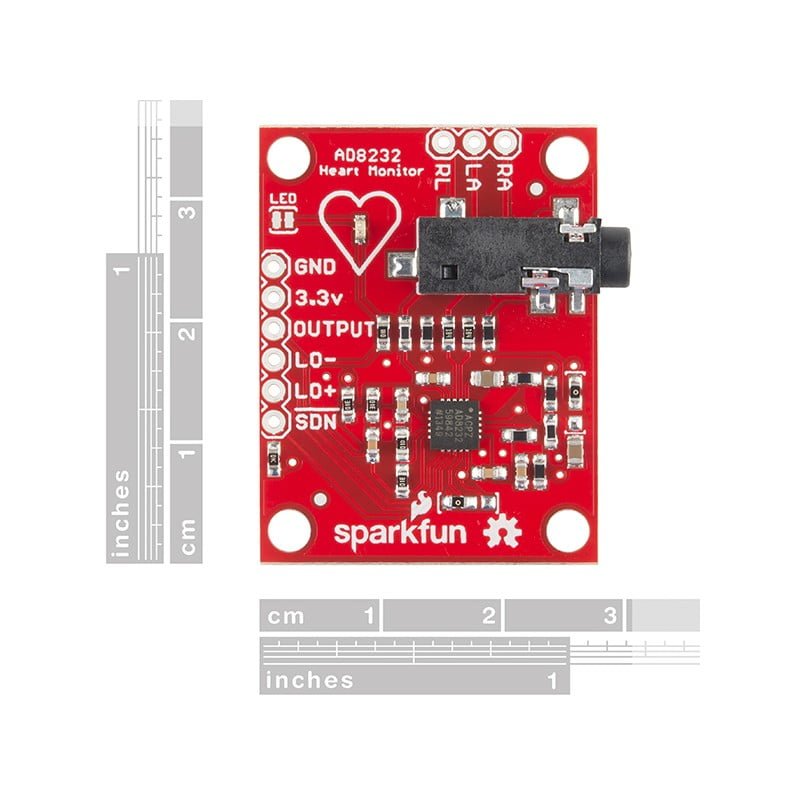
- Operating Voltage – 3.3V
- Analog Output
- Leads-Off Detection
- Shutdown Pin
- LED Indicator
- 3.5mm Jack for Biomedical Pad Connection or Use 3 pin header
₨ 1,699 ₨ 2,860
Out of stock
AD8232 ECG Module Price in Pakistan
The AD8232 single-lead module is an analog front end for observing small biopotential signals in educational electronics and signal-processing projects. It provides an analog output plus lead-off indicators for a compatible 3.3V microcontroller or data-acquisition input.
When comparing an AD8232 ECG module price in Pakistan, check whether leads and pads are included, verify the exact board pinout, and keep the setup battery powered or properly isolated from mains equipment. Motion, poor electrode contact and long wires can add noise.
Interface and features
- 3.3V operating supply
- Analog signal output
- LO+ and LO- lead-off detection outputs
- Shutdown pin
- Onboard indicator LED on the listed module
- 3.5 mm lead connector and board connection pads
Package and use
The listed package contains one AD8232 sensor module. Leads and disposable pads should be treated as separate unless the current package details explicitly include them. This hobby module is for electronics learning and prototyping only; it is not approved for diagnosis, patient monitoring or medical decisions.
Browse more heart-rate and biomedical sensors at Robonation Pakistan. Review the official Analog Devices AD8232 documentation before designing the circuit.
Based on 0 reviews
Be the first to review “Single Lead Heart Rate Monitor ECG – AD8232”
Related products
-
Distance & Proximity, Sensors
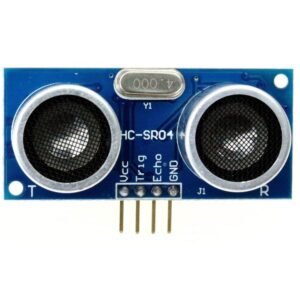
Ultrasonic Sensor HC-SR04
- Power Supply : 5V DC
- Quiescent Current : <2mA
- Working Currnt: 15mA
- Effectual Angle: <15
- Ranging Distance : 2cm 400 cm/1x13ft
- Resolution : 0.3 cm
- Measuring Angle: 30 degree
- Trigger Input Pulse width: 10uS minimum
- Dimension: 45mm x 20mm x 15mm
SKU: n/a -
-
Heart Rate And Muscle Sensors, Sensors
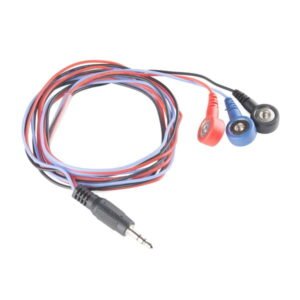
Sensor Cable – Electrode Pads
Three-conductor electrode-pad cable, approximately 24 inches long, with a 3.5 mm plug and red, blue and black snap-style connectors for compatible low-voltage educational sensor modules. Confirm the exact plug pinout and pad compatibility before use. Not a medical-grade patient cable.
SKU: n/a -
Accelero, Gyro. IMU, Magneto, Sensors
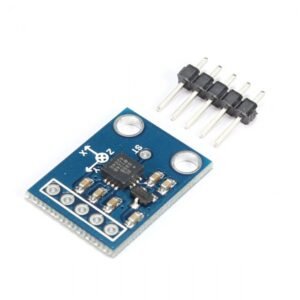
Gy-61 Triple Axis Accelerometer Adxl335
GY-61 ADXL335 three-axis analog accelerometer module for measuring tilt, motion, shock and vibration. It provides separate X, Y and Z voltage outputs and is listed with an onboard voltage regulator for compatible 3.3V or 5V microcontroller projects. This is an analog-output sensor, not an I2C module.
SKU: n/a
There are no reviews yet.