

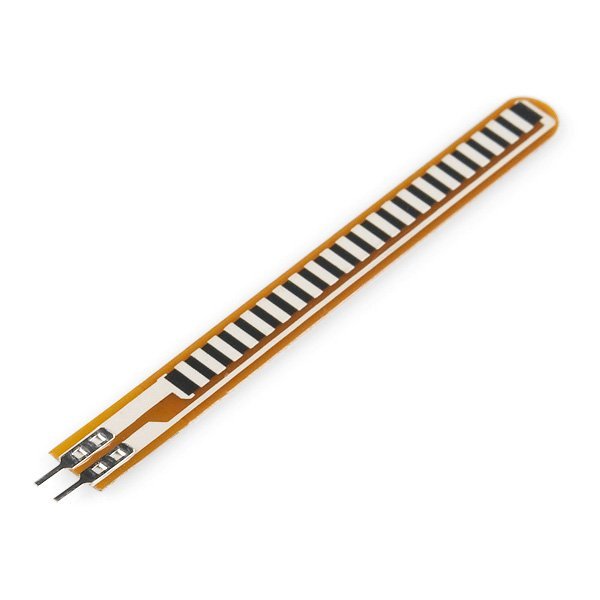
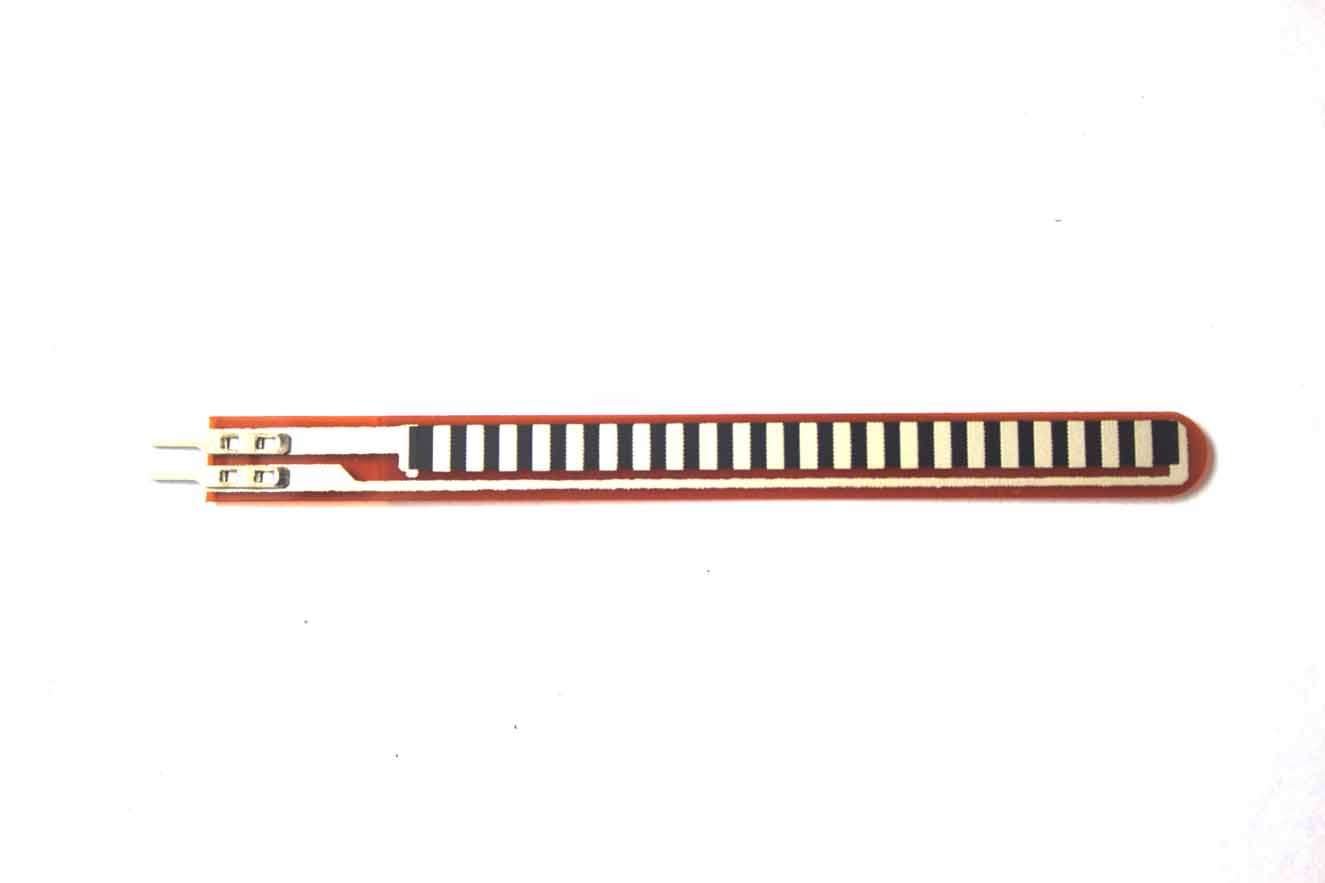
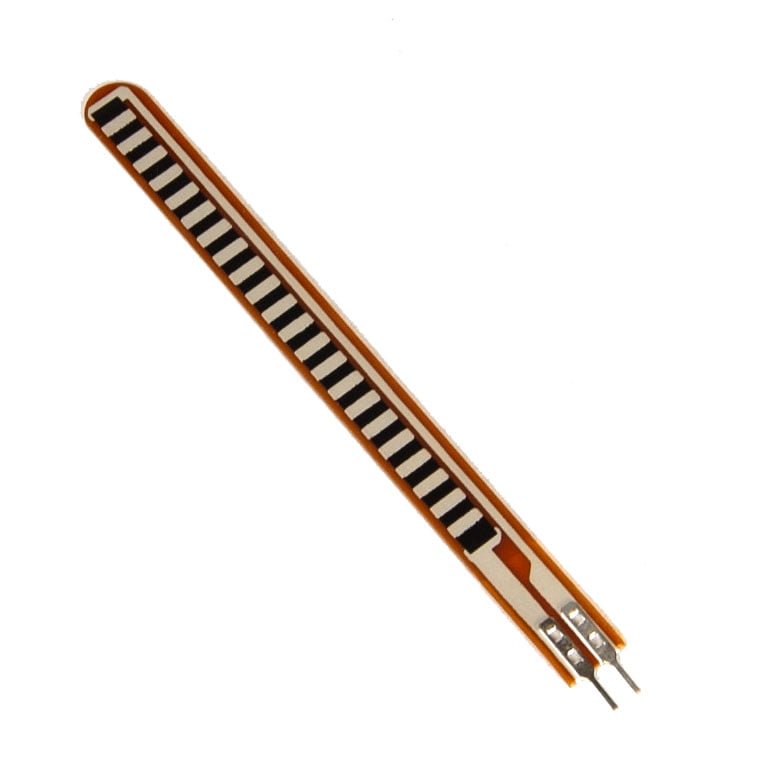
Flex Sensor 2.2 Inch
2.2-inch resistive flex sensor for measuring relative bend in Arduino-compatible wearables, robotics, controls and motion experiments. Resistance increases as the active strip bends. Secure the base, use a voltage-divider circuit and avoid creasing or repeatedly flexing the connector area.
₨ 2,999 ₨ 3,744
Flex Sensor 2.2 Inch Price in Pakistan
The 2.2-inch flex sensor is a thin variable resistor used to detect relative bending in wearables, robotics, control interfaces, musical instruments and motion experiments. As the active strip bends, its resistance increases; a microcontroller can measure that change through a voltage-divider circuit.
Key characteristics
- Active sensor length: approximately 2.2 inches
- Resistance increases with bending
- Low-profile, flexible construction
- Connector spacing suitable for common prototyping arrangements
- Useful for relative bend and angle experiments after calibration
Installation guidance
Secure the base and allow only the active sensing length to flex. Do not make a sharp crease, bend at the connector or repeatedly strain the lead area. The electrical response depends on bend radius, mounting and component tolerance, so calibrate minimum and maximum readings inside the finished project.
This sensor does not directly output an angle in degrees. Code must map measured resistance or voltage to the required application range.
For voltage-divider testing, connect the sensor to an Arduino UNO R3 through a suitable fixed resistor and calibrate it in the final mounting.
Explore more flex and motion sensors from Robonation Pakistan. For general flex-sensor specifications and handling guidance, review the Spectra Symbol flex-sensor resources.
Based on 0 reviews
Be the first to review “Flex Sensor 2.2 Inch”
Related products
-
Sensors, Weight
Load Sensor – 50kg
50kg-class load sensor for weighing and force-measurement prototypes. Its low-level bridge signal normally requires a compatible load-cell amplifier or ADC such as an HX711, careful mechanical mounting and calibration with known weights. Confirm whether the planned scale needs multiple half-bridge sensors before ordering.
SKU: n/a -
-
Accelero, Gyro. IMU, Magneto, Sensors
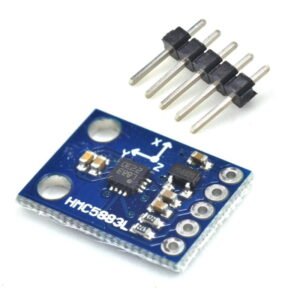
GY-273 Magneto HMC5883L
- Supply Voltage VCC: 3.3 to 6 V
- Heading Accuracy: 1 to 2
- Magnetic Field Range: -8 to +8 Gauss
- I2C Address: 0x1E (7-bit address)
- Max Data Rate: 160 Hz
- Digital Voltage Level: 3.3V
- Dimensions (excluding pins): 18.2mm (0.717) x 13.3mm (0.524) x 2.2mm (0.087)
- Weight: 0.95g (0.034oz)
SKU: n/a -
Accelero, Gyro. IMU, Magneto, Sensors
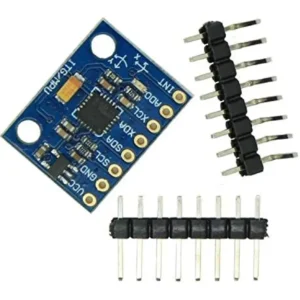
GY521 MPU6050 Module 6DOF
- Chip: MPU-6050
- Power supply: 3v-5V
- Gyroscope range: + 250 500 1000 2000/ s
- Acceleration range: 2 4 8 16 g
- Communication: Standard IIC communication agreement
- Chip built-in 16 bit AD converter, 16 bits of data output
- Pin Pitch 2.54 mm
- SIZE: 20.3mm x 15.6mm
SKU: n/a
There are no reviews yet.