

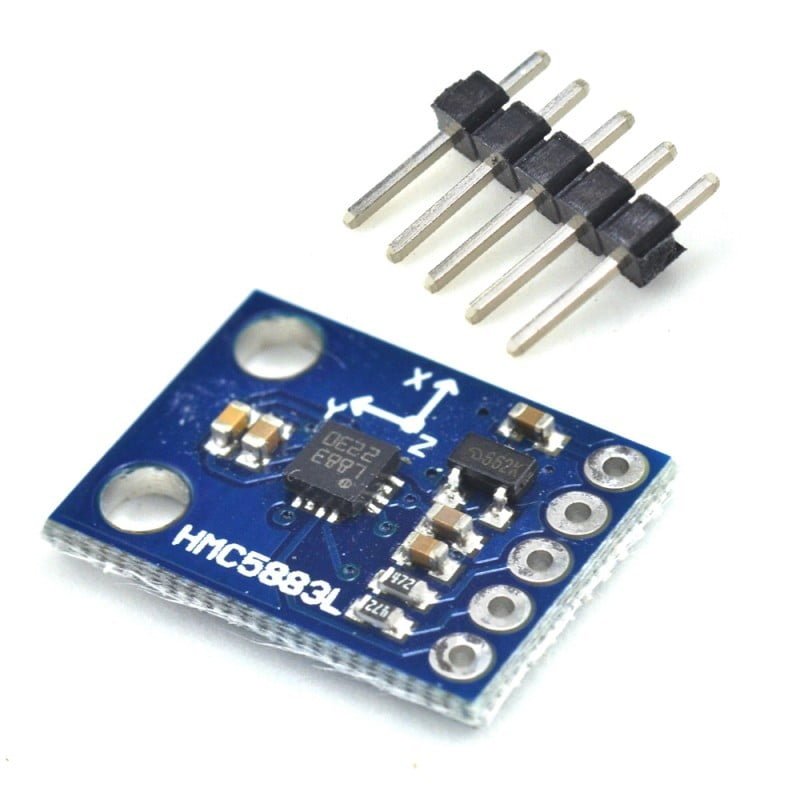

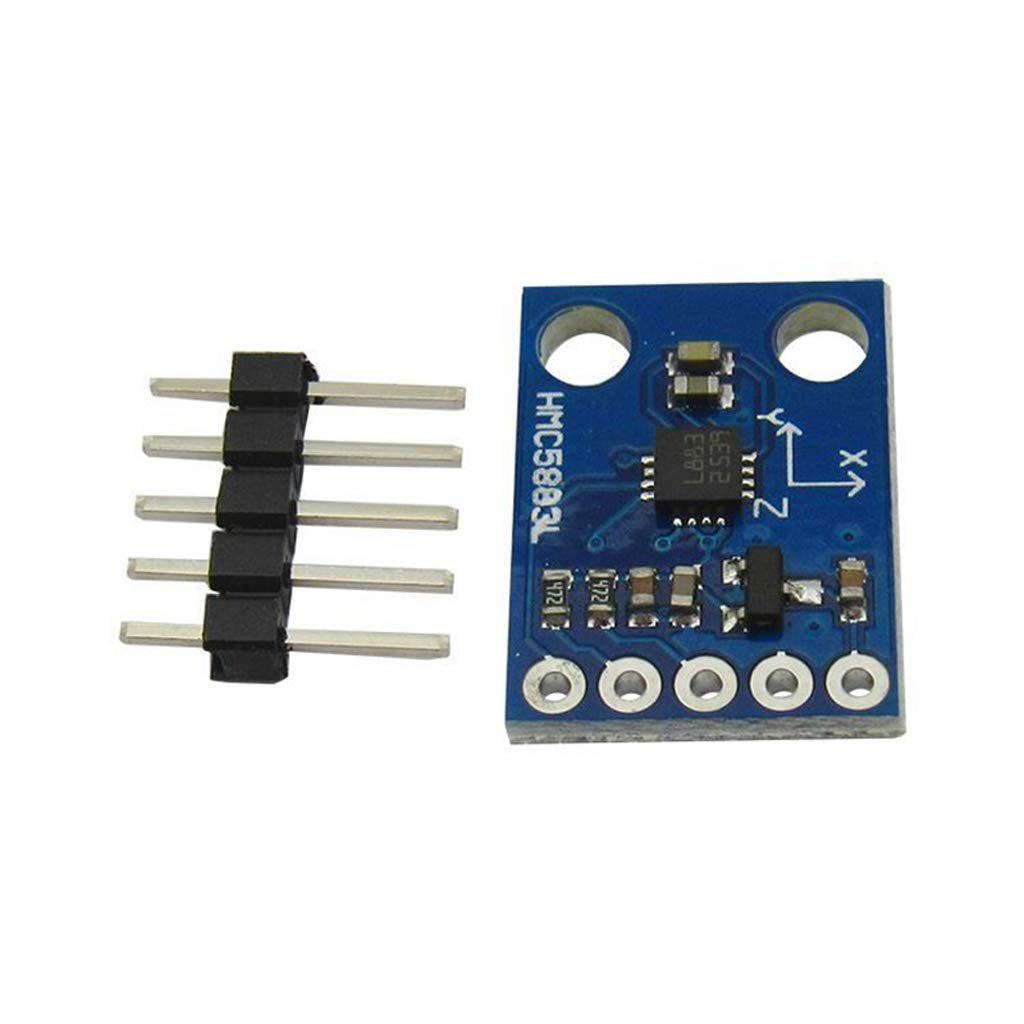
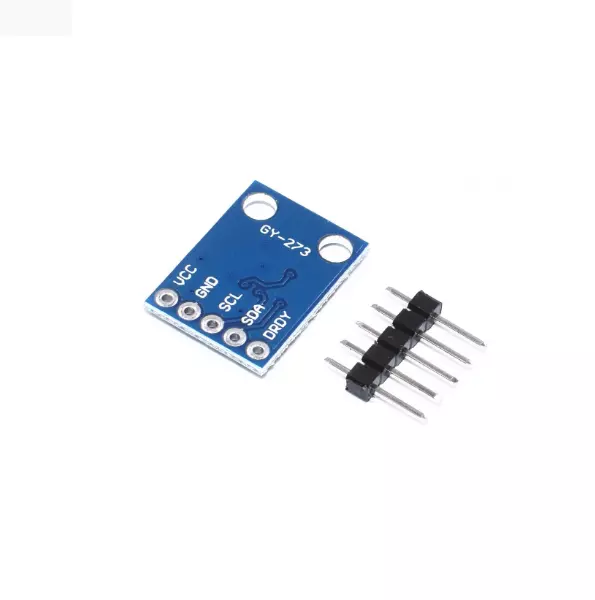
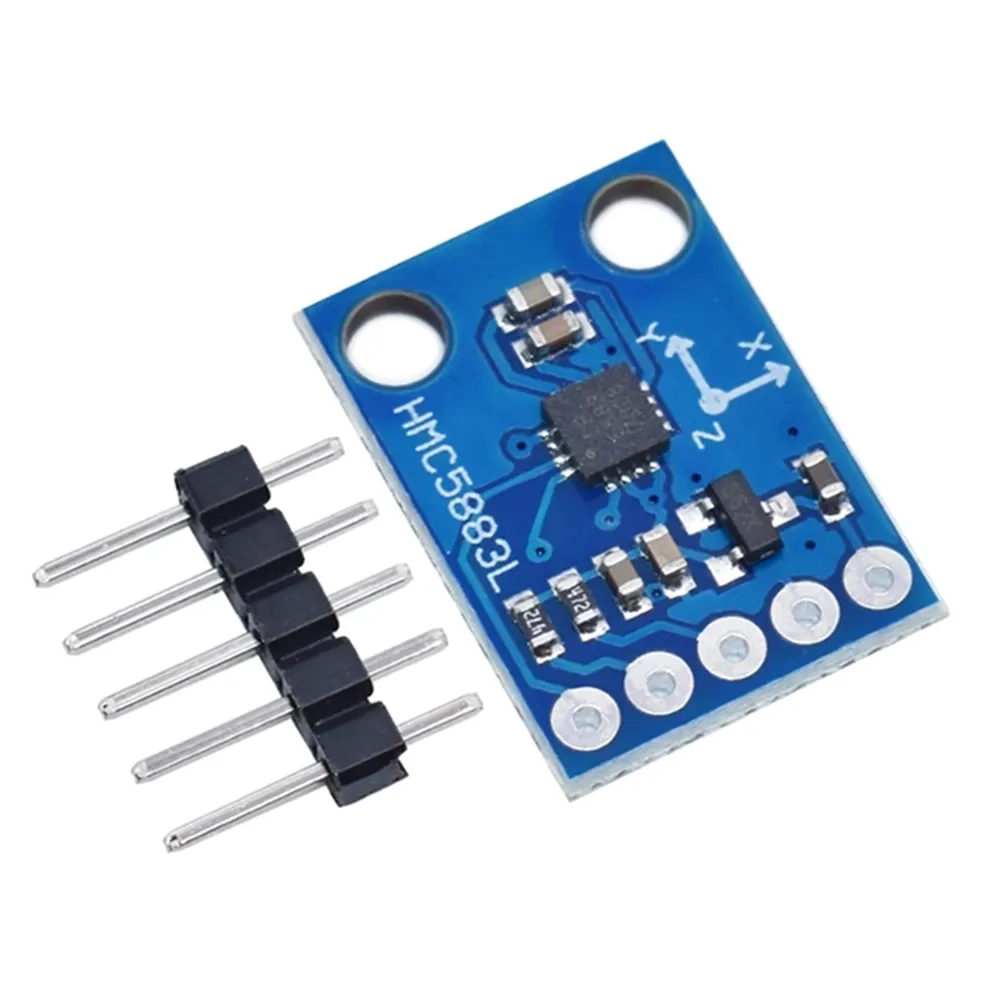
GY-273 Magneto HMC5883L
- Supply Voltage VCC: 3.3 to 6 V
- Heading Accuracy: 1 to 2
- Magnetic Field Range: -8 to +8 Gauss
- I2C Address: 0x1E (7-bit address)
- Max Data Rate: 160 Hz
- Digital Voltage Level: 3.3V
- Dimensions (excluding pins): 18.2mm (0.717) x 13.3mm (0.524) x 2.2mm (0.087)
- Weight: 0.95g (0.034oz)
₨ 599 ₨ 780
GY-273 HMC5883L Magnetometer Price in Pakistan
The GY-273 is sold as a three-axis digital magnetometer module for compass, navigation and magnetic-field experiments. It communicates through I2C and can provide magnetic measurements on the X, Y and Z axes after suitable calibration.
Important chip-verification note
GY-273 boards can be supplied with different chip markings or a QMC5883-family replacement. Verify the IC printed on the received module before selecting an I2C address, library or example code. Values below refer to the listed HMC5883L version.
Listed specifications
- Supply voltage: 3.3V to 6V
- Digital logic level: 3.3V
- I2C interface
- Listed HMC5883L address: 0x1E
- Listed magnetic-field range: approximately ±8 gauss
- Listed maximum data rate: 160Hz
- Approximate board dimensions excluding pins: 18.2 × 13.3 × 2.2mm
Applications
- Digital compass experiments
- Robot and UAV heading projects
- Navigation prototypes
- Three-axis magnetic-field measurement
Calibration guidance
Motors, steel fasteners, magnets and current-carrying wires can distort readings. Mount the sensor away from magnetic interference and perform hard-iron and soft-iron calibration in the completed project.
For controller testing, see the Arduino UNO R3 with cable. Explore more motion and magnetometer sensors from Robonation Pakistan.
For the listed chip, review the HMC5883L technical datasheet.
Based on 0 reviews
Be the first to review “GY-273 Magneto HMC5883L”
Related products
-
-
Accelero, Gyro. IMU, Magneto, Sensors
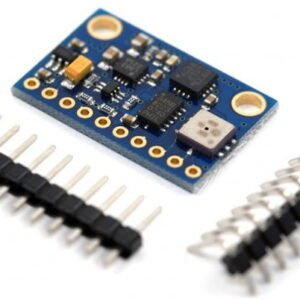
10 DOF IMU Sensor
Multi-sensor 10 DOF IMU module for acceleration, rotation, magnetic-field and barometric-pressure measurements in robotics and navigation prototypes. Board revisions may use different sensor IC combinations, so verify the supplied board markings, I2C addresses and library compatibility before setup.
SKU: n/a -
Flex & Force, Sensors
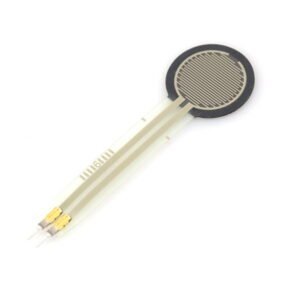
Force Sensitive Resistor 0.5 INCH FSR
Thin 0.5-inch force-sensitive resistor for detecting relative touch and pressure in Arduino-compatible controls, robotics and interface prototypes. Resistance decreases as force is applied to the active circular area. Use a voltage-divider circuit and application-specific calibration; this sensor is not a precision weighing load cell.
SKU: n/a -
Distance & Proximity, Sensors
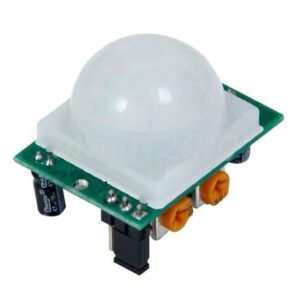
HCSR501 HC-SR501 PIR Sensor
HC-SR501 passive infrared motion sensor for Arduino-compatible alarms, automatic lighting and occupancy prototypes. It provides adjustable sensitivity and output delay, plus repeatable or non-repeatable trigger modes. Allow a warm-up period and test the installed detection area before relying on the output.
SKU: n/a
There are no reviews yet.